


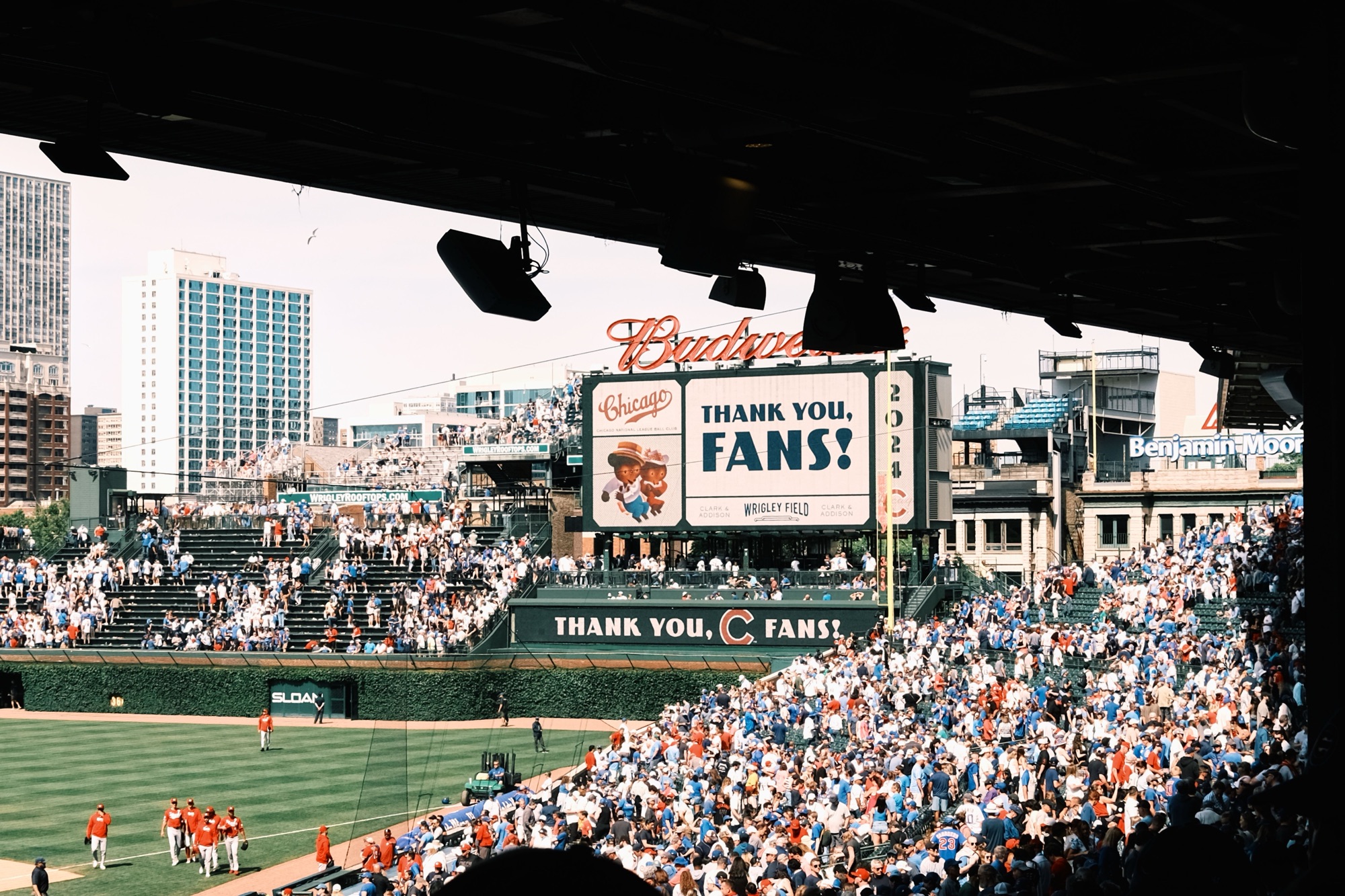
The clip has reignited a familiar debate: what happens, legally, when someone takes it upon themselves to “punish” another fan for a personal or political choice that isn’t actually illegal?
Was Refusing to Stand a Crime? No.
Under U.S. law, choosing not to stand for the national anthem is not a crime. It’s widely understood as a protected form of expression under the First Amendment, which shields individuals from government punishment for political speech or silent protest. A private stadium may have its own rules about fan conduct, but simply remaining seated during the anthem does not violate Illinois criminal law in any way. The person who stayed seated in this case committed no offense.
Could the Man Who Slapped Him Be Charged?
Under Illinois law, the person who threw the slap is the one who may be facing criminal exposure — not the person who stayed seated.
Illinois defines battery as knowingly causing bodily harm to another person, or making physical contact of an insulting or provoking nature, without legal justification. A slap easily fits this definition, even if it doesn’t leave a visible injury or require medical treatment. The law doesn’t require serious harm — insulting or provoking contact is enough.
Depending on the specific facts — how hard the contact was, whether it happened in a way that risked greater injury, or whether it occurred in a location like a public venue with aggravating factors — prosecutors could also consider additional charges such as:
• Disorderly conduct, if the act created a public disturbance
• Aggravated battery, which can apply if the battery occurs in certain protected locations, involves greater harm, or meets other statutory enhancements
The Bottom Line
In situations like this one, the legal reality often runs opposite to the emotional reaction online. The fan who declined to stand broke no law and can’t be prosecuted for it. The fan who slapped him, on the other hand, could be looking at criminal charges — regardless of how strongly he felt about the anthem, or how much public sympathy the incident generates on social media.
As is often the case with viral stadium confrontations, video clips capture the moment of contact but rarely the full context — leaving the final legal outcome, if charges are pursued, up to investigators and prosecutors reviewing the complete circumstances.




Leave a Reply