


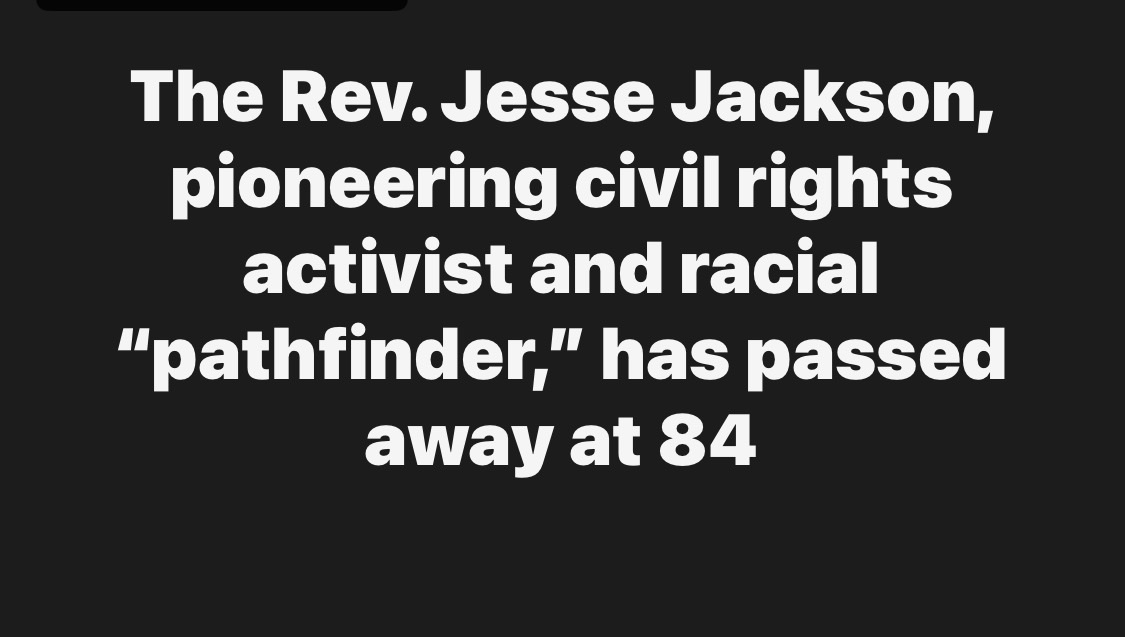
Jesse Jackson is a prominent American civil rights activist, Baptist minister, and political leader who has spent more than six decades fighting for racial justice, economic equality, and political empowerment.
Born October 8, 1941, in Greenville, South Carolina, Jackson grew up during Jim Crow segregation. He later attended North Carolina A&T State University, where he became active in the civil rights movement. After moving to Chicago, he worked closely with Martin Luther King Jr., becoming a key organizer in the Southern Christian Leadership Conference (SCLC) and playing a visible role in campaigns for voting rights, desegregation, and economic justice.
After King’s assassination in 1968, Jackson founded Operation PUSH (People United to Save Humanity), an organization focused on Black economic empowerment, education, and corporate accountability. In 1984, Operation PUSH later merged with the National Rainbow Coalition, forming the Rainbow/PUSH Coalition, which broadened its mission to include women, labor unions,marginalized groups—pushing the idea of a multiracial, inclusive political “rainbow.”
Jackson made history with his 1984 and 1988 Democratic presidential campaigns, becoming the first Black candidate to mount a serious, nationally competitive run for the presidency. In 1988, he won over 7 million votes and placed second in several primaries, helping expand Black voter participation and reshaping the Democratic Party’s platform.
Beyond electoral politics, Jackson has been an international human rights advocate, negotiating the release of political prisoners and hostages in countries such as South Africa, Syria, and Cuba. He has also been a frequent voice in media and public discourse on issues ranging from police brutality and poverty to labor rights and foreign policy.
Despite controversies and criticism over the years, Jesse Jackson remains one of the most influential civil rights figures of the post–Martin Luther King Jr. era, known for turning protest into political power and insisting that democracy must include those historically pushed to the margins.




Leave a Reply