1. English Common Law Origins
- Adverse possession originated in medieval England as a way to stabilize land ownership.
- If someone occupied land openly, continuously, and without permission for a certain period, they could eventually gain legal title.
- In England, it was largely about resolving disputes among already recognized landholders, not taking land from indigenous peoples.
2. Colonial and U.S. Adaptation
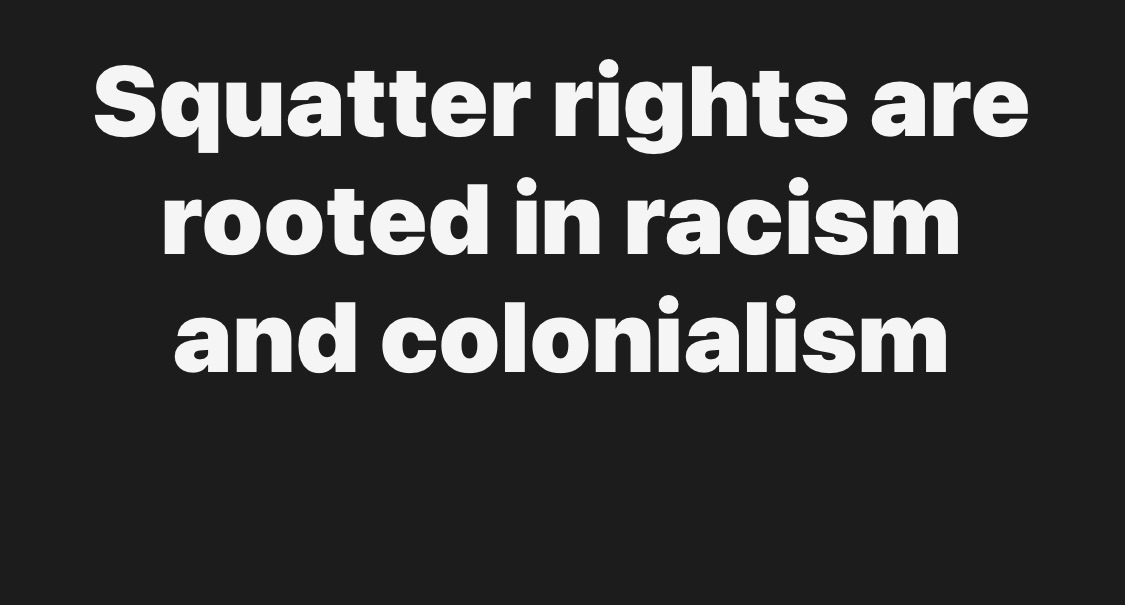
- When European settlers colonized North America, these legal ideas were adapted to justify taking land from Indigenous peoples.
- Squatters (often white settlers) would occupy land that Indigenous peoples lived on, claiming it over time under adverse possession laws.
- The law ignored Native claims entirely, treating Indigenous land as “empty” or “unused” unless formally recognized under European-style deeds.
- Similarly, Black people, especially enslaved or recently freed African Americans, were often denied legal property rights, making adverse possession another tool to favor white settlers.
3. Racist Implications
- Adverse possession in the U.S. codified racial inequality in land ownership:
- It empowered white settlers to claim Indigenous and non-white-owned lands.
- It denied non-white people legal recourse, reinforcing systemic dispossession.
- It played a role in westward expansion, often backed by laws like the Homestead Act (1862), which explicitly favored white settlers.
4. Summary
- While on the surface squatter rights might seem like a neutral way to resolve land disputes, in practice in the U.S., they were deeply tied to colonialism and racism.
- They institutionalized the seizure of land from non-white communities while giving white settlers a legal path to ownership.



Leave a Reply