Content Is Welcome, Ownership Is Not

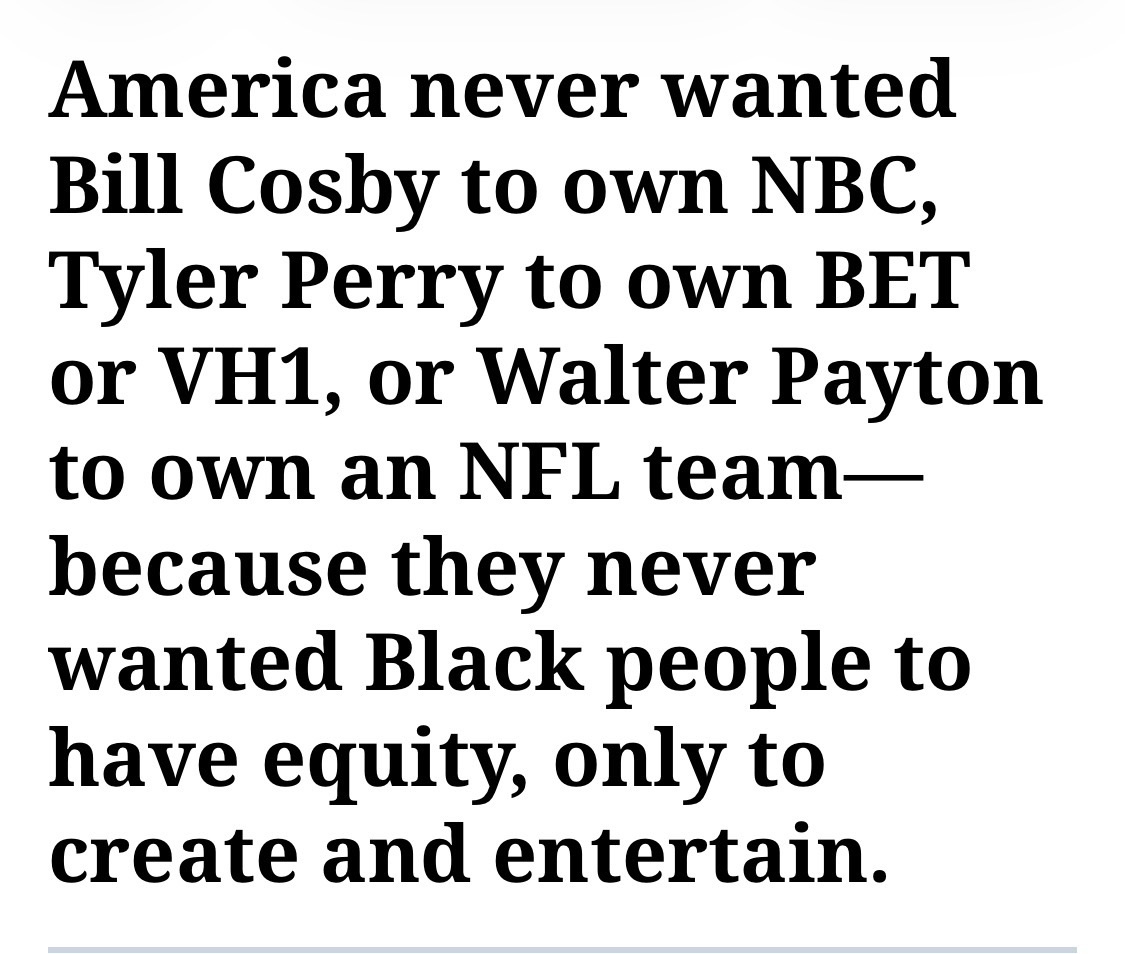
For decades, Black creators have been central to building American media, yet ownership and equity remain consistently out of reach. Bill Cosby’s career illustrates this tension clearly. From a business perspective, Cosby provided enormous value to NBC through hit shows like The Cosby Show and A Different World. These programs helped define the network’s success, culture, and profitability. Yet when Cosby reportedly explored the idea of buying NBC while it was up for sale, the response shifted.
Despite his deep experience creating successful television, Cosby was told he lacked sufficient knowledge of the TV business. This was not a question of ability to partner with experts or hire experienced executives—options commonly afforded to others—but a hard stop. Media narratives soon followed, suggesting he would “hire all his Black friends” and take over the network. This fear-based framing reflects a long-standing pattern: when Black Americans approach positions of real power, media is often used to create hysteria and resistance.
The message is consistent—Black creators are welcomed for their ideas, influence, and cultural impact, but conversations around equity and ownership are treated differently. Content creation is encouraged; control over distribution is not.
This pattern did not end with Cosby. Tyler Perry’s career offers a more recent example. Perry built a massive, profitable entertainment empire independently when major studios initially dismissed him. Only after he demonstrated undeniable financial success did companies like Lionsgate and BET seek partnerships. Even then, Perry largely remained a content supplier rather than a distributor or owner.
When BET and VH1 were reportedly up for sale, many believed Perry was a strong candidate to purchase BET—which would have marked one of the first times since Bob Johnson that the network was Black-owned. Perry later described the negotiation process as deeply disrespectful, citing inflated valuations and dismissive treatment. Ultimately, the deal did not happen. Yet the industry remained happy to continue buying his content.
The distinction is critical. As Prince once explained, “Content is king, but distribution is emperor.” Distributors control access, scale, and long-term power. Companies like Netflix, YouTube, and major networks do not simply create—they distribute. Historically, Black Americans are allowed to be kings but blocked from becoming emperors.
This pattern extends beyond media. Walter Payton, one of the greatest NFL players and ambassadors the league has ever known, sought majority ownership of an NFL team and was told he lacked experience. Ironically, this same league later named its most prestigious humanitarian award after him. Meanwhile, others with little or no executive experience have been granted ownership stakes or leadership roles.
The contradiction is familiar: Black Americans are told they need experience to gain access, yet are denied access that would allow them to gain experience. Other groups are permitted to learn on the job, inherit roles, or partner upward. Black success, by contrast, is often expected to be individual and isolated—achievement without expansion.
What ties these examples together is a systemic comfort with Black excellence that does not threaten existing power structures. Black creators may succeed, but not in ways that allow them to bring others with them, build generational control, or reshape institutions from the top down.
The lesson is clear. The industry is not opposed to Black talent—it depends on it. What it resists is Black ownership, Black unity, and Black control over distribution. Until that changes, the cycle will continue: create, profit for others, and be told to stay grateful.

Leave a Reply