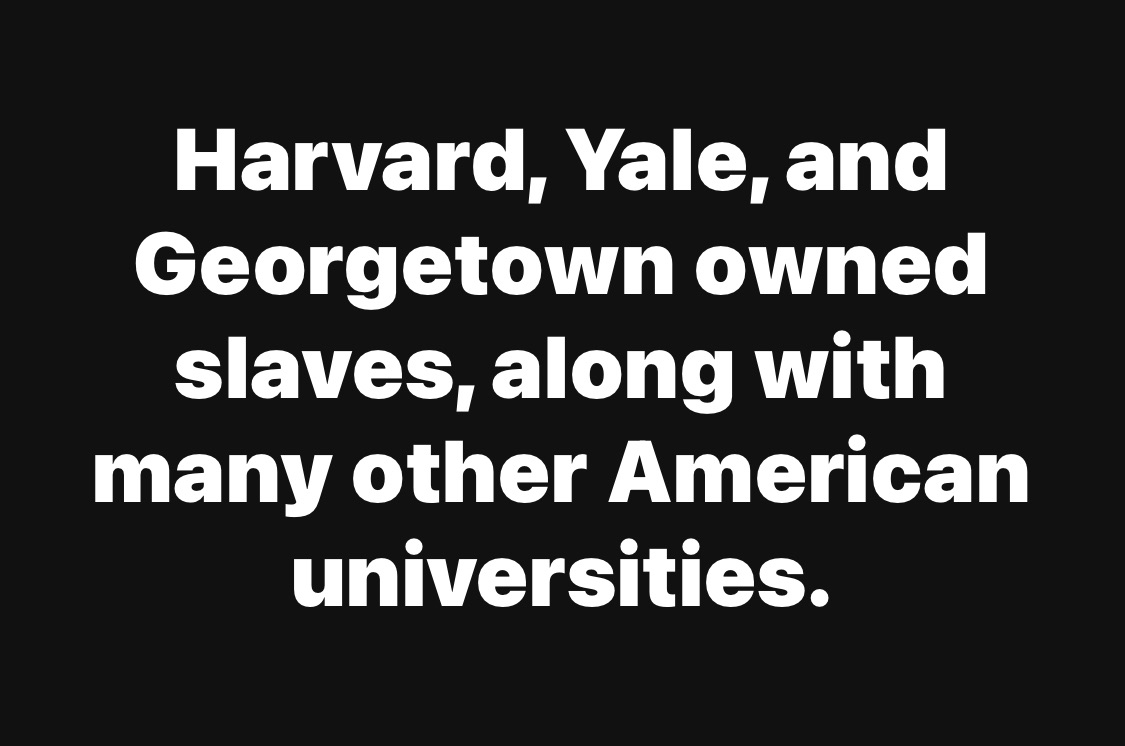
Universities with Historical Ties to Slavery
- Georgetown University (Washington, D.C.)
In 1838, Georgetown sold 272 enslaved men, women, and children to settle institutional debts, a sale that directly financed the university’s continued operation. - Harvard University (Massachusetts)
Historical research has shown that several early presidents, faculty members, and major benefactors owned enslaved people or derived wealth from slavery-related enterprises. - Brown University (Rhode Island)
In 2016, Brown University published a comprehensive report detailing its historical involvement in slavery and the transatlantic slave trade, particularly through its founders and early donors. - University of Virginia
Founded by Thomas Jefferson, a documented slave owner, the university relied extensively on enslaved labor for its construction, maintenance, and daily operations. - Yale University (Connecticut)
Yale’s early financial growth was supported in part by benefactors involved in slavery, including slave traders and individuals who enslaved others. - Princeton University (New Jersey)
Research has found that many of Princeton’s early trustees, presidents, and donors were slave owners or had direct economic ties to slavery. - Columbia University (New York)
Archival records indicate that several of Columbia’s early leaders and benefactors participated in slavery or benefited from the broader slave economy. - College of William & Mary (Virginia)
The institution has formally acknowledged that enslaved people labored on its campus and played a role in sustaining the college during its early years. - University of North Carolina at Chapel Hill
Enslaved labor was used in the construction and maintenance of the campus, and many early administrators, donors, and supporters enslaved others. - Emory University (Georgia)
Emory University has documented historical links to slavery, including financial support and labor connected to enslaved people during its formative years.


Leave a Reply